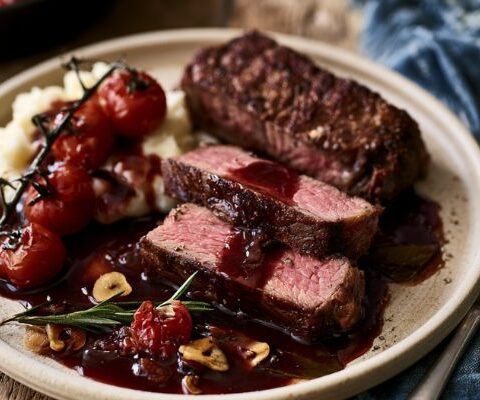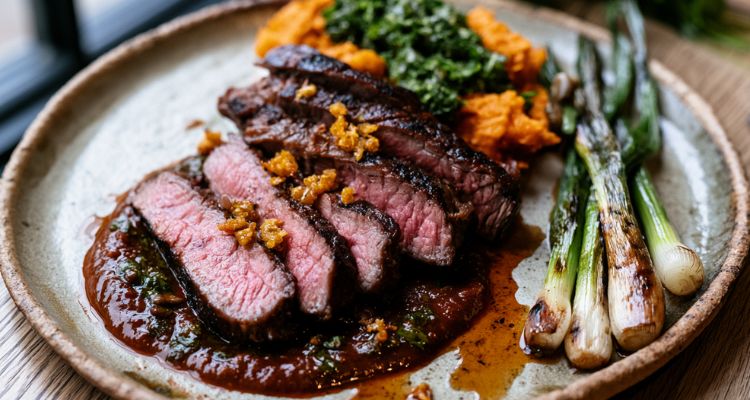
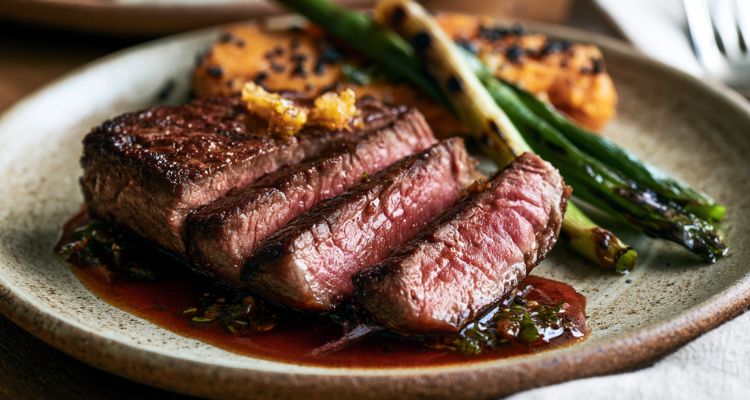
Jamie Oliver’s sirloin steak is a pan-seared 260g cut served with smashed sweet potatoes and a red chimichurri. It takes about 20 minutes, serves two, and needs no marinating or resting overnight. Everything cooks in a single frying pan.
This is from Oliver’s 7 Ways cookbook (2020), his date night dinner for wife Jools. He built the recipe around one technique he calls “brilliant”: cooking the steak in its own rendered fat. That approach changes the flavour of the sear completely.
Oliver strips the fat off the sirloin, dices it, and drops it into a cold pan. As the pan heats up, the fat renders and coats the surface. The steak then sears in pure beef fat, giving a deeper crust than oil ever could.
Jamie Oliver Sirloin Steak
Course: DinnerCuisine: BritishDifficulty: Easy2
servings10
minutes10
minutes490
kcal25
minutesFrom Jamie Oliver’s 7 Ways (2020), a sirloin steak dinner for two built in a single frying pan. The leftover chimichurri keeps in the fridge and works on chicken, fish or grilled veg.
Ingredients
1 x 260g higher-welfare sirloin steak
2 cloves of garlic
2 sweet potatoes (250g each)
1 bunch of spring onions
2 fresh red chillies
½ x 460g jar of roasted red peppers
½ a bunch of flat-leaf parsley (15g)
Extra virgin olive oil
Red wine vinegar
Sea salt and black pepper
Directions
- Render the fat: Remove and finely dice the fat from the steak. Put it into a non-stick frying pan on a medium-low heat with the unpeeled garlic cloves, turning them every minute in the fat as it gently crisps up.
- Cook the sweet potatoes: Peel the sweet potatoes and chop into 4cm chunks. Cook in boiling salted water for 10 minutes, or until tender, then drain, smash, season and keep warm.
- Brown the aromatics: Trim the spring onions, halve and deseed the chillies, and lightly brown on both sides in the steak fat.
- Make the chimichurri: Remove 4 spring onions and the crispy fat bits to a dish. Place the rest of the spring onions and the chillies in a blender and squeeze in the soft garlic flesh. Drain and add the peppers, along with the parsley, and ½ a tablespoon each of extra virgin olive oil and red wine vinegar, then blitz until smooth. Season to perfection.
- Sear the steak: Turn the heat under the pan to high. Cut off the sinew, season the steak with sea salt and lots of black pepper, then cook to your liking, turning every minute.
- Rest and serve: Let the steak rest for 1 minute on top of the reserved spring onions, then slice. Spoon 2 tablespoons of chimichurri on to each plate, sit the steak on top with any resting juices, then serve with the sweet potato, spring onions and crispy bits.
Notes
- Note: Chimichurri makes more than 2 servings (“save the rest for future meals”), so not all ingredients are consumed per serving. Published nutrition on jamieoliver.com shows 487 kcal per serving. Rounded to 490 kcal.
FAQs
What is Jamie Oliver’s red chimichurri?
It’s Oliver’s twist on the classic Argentine sauce, and the colour is the giveaway. Traditional chimichurri is green, made with parsley, oregano and raw garlic blended with oil and vinegar. Oliver swaps most of that for roasted red peppers, charred spring onions and fresh red chillies, so the sauce comes out a deep red.
The flavour is smokier and sweeter than a green chimichurri because the peppers and onions are cooked before blending. Oliver’s version makes more than you need for two servings, which is deliberate. He says to save the extra for future meals, and it keeps well in the fridge for up to three days.
How long should I cook sirloin steak for each level of doneness?
Oliver says to cook the steak “to your liking, turning every minute” without giving specific timings per level. For a 260g sirloin that’s about 2.5cm thick, aim for roughly 2 minutes each side for rare, 3 minutes for medium-rare, and 4 minutes for medium.
The turning-every-minute method is worth following because it builds an even crust on both sides rather than one thick sear. Press the centre of the steak gently: soft and springy means rare, firmer means medium. A meat thermometer takes the guesswork out, with 50°C for rare, 55°C for medium-rare and 60°C for medium.
Why does Oliver rest the steak on the spring onions?
It’s a small step that most recipes skip, but it does two things at once. The steak’s resting juices soak down into the charred spring onions, so they pick up a beefy, salty flavour they wouldn’t have on their own. The onions also lift the steak slightly, so the bottom doesn’t sit in liquid and lose its crust.
Oliver only rests the steak for 1 minute here, which is shorter than many chefs recommend. That works because the sirloin is thin and he’s been turning it every minute, so the juices don’t need long to redistribute.
Can I use a different cut of steak for this recipe?
Rib-eye works well with the rendered-fat technique because it has more marbling, so you get even more flavour from the beef fat in the pan. The cooking time stays roughly the same for a similar thickness. Rump is cheaper and handles high heat well, though it’s tougher and benefits from resting 3 to 5 minutes.
Fillet steak would be wasted here. It’s too lean to render any useful fat, and the chimichurri’s punch would overpower the fillet’s more subtle flavour. Oliver built this recipe around sirloin specifically because the fat strip on the edge is thick enough to render down properly.
How does this compare to Mary Berry’s sirloin steak?
Berry’s “Mustard steak with vine tomatoes and foolproof Béarnaise sauce” takes a different approach entirely. She pan-fries the steak in oil rather than rendered fat, and focuses her effort on building a tarragon Béarnaise to serve alongside. Her version is more traditional French bistro, while Oliver’s leans Mediterranean with the chimichurri.
The biggest difference is in the sides. Berry keeps it classic with vine tomatoes in the same pan, while Oliver builds a fuller plate with sweet potatoes and chimichurri. Berry’s recipe is slightly faster since there’s no chimichurri to blend, but Oliver’s gives you leftover sauce for the next day.
What are the crispy fat bits Oliver serves on top?
When you render the diced sirloin fat at the start, the pieces shrink down and turn golden and crunchy. Oliver removes these from the pan before searing the steak and sets them aside as a garnish. They go back on at the very end, scattered over the finished plate.
They add a texture the rest of the dish doesn’t have. The steak is soft, the sweet potato smooth, the chimichurri wet. Those crunchy nuggets of beef fat give each bite the contrast it needs. Don’t throw them away or leave them in the pan. They’re part of the recipe, not waste.