Mary Berry’s apricot and orange cheesecake is a no-bake, gelatine-set dessert with dried apricots simmered in orange juice. The filling blends apricot puree with cream cheese and soured cream, set on a biscuit base in a 23cm (9 in) tin. It serves 10.
Berry opens this recipe in Baking Bible (2010) with a technique note on gelatine. She teaches the sponging method here more clearly than in any of her other cheesecakes, making it a good starting point for beginners.
The meringue fold defines the texture. Berry whisks egg whites with sugar until “very stiff,” then folds the apricot mixture into this meringue. Reversing the usual fold direction creates a lighter filling.
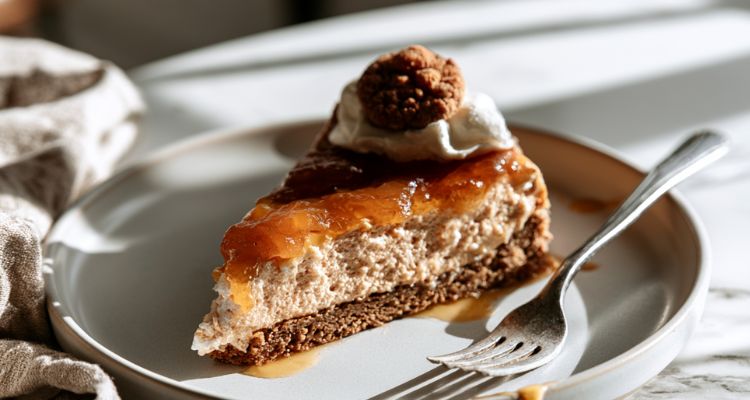
Mary Berry Apricot and Orange Cheesecake
Course: DessertCuisine: BritishDifficulty: Easy10
servings30
minutes330
kcalFrom Mary Berry’s Baking Bible (2010), this no-bake cheesecake folds dried apricots and orange juice through a cream cheese filling with Italian meringue. Decorated with apricot jam glaze, whipped cream, and ratafia biscuits.
Ingredients
- For the base:
100g (4 oz) digestive or oat biscuits
50g (2 oz) butter
25g (1 oz) demerara sugar
- For the cheesecake:
15g (½ oz) sachet powdered gelatine
4 tbsp water
175g (6 oz) ready-to-eat dried apricots
200ml (7 fl oz) fresh orange juice
3 tbsp clear honey
225g (8 oz) full-fat cream cheese
150ml (¼ pint) soured cream
2 large eggs, separated
100g (4 oz) caster sugar
- For the topping:
1 tbsp apricot jam
150ml (¼ pint) whipping or double cream, whipped
10 small ratafia biscuits
Directions
- Make the base: Put the biscuits into a plastic bag and crush with a rolling pin. Melt the butter in a medium-sized pan. Remove from the heat and stir in the biscuit crumbs and sugar. Press into a 23cm (9 in) loose-bottomed cake tin and leave to set.
- Prepare the gelatine: Sprinkle the gelatine over the water in a small bowl and leave to “sponge.”
- Cook the apricots: Place the apricots in a pan with the orange juice, bring to the boil then simmer gently for about 5 minutes or until tender.
- Blend the filling: Turn the apricots into a food processor and add the honey, cream cheese, soured cream, and egg yolks. Process until well mixed and smooth.
- Dissolve the gelatine: Set the bowl of gelatine over a pan of gently simmering water and allow to dissolve. Mix into the apricot mixture.
- Make the meringue: Whisk the egg whites until frothy, add the caster sugar a little at a time, whisking well after each addition. Whisk until all the sugar has been added and the mixture is very stiff. Turn the apricot mixture into the meringue mixture and fold well together.
- Set: Pour the mixture onto the biscuit crust and chill in the fridge to set.
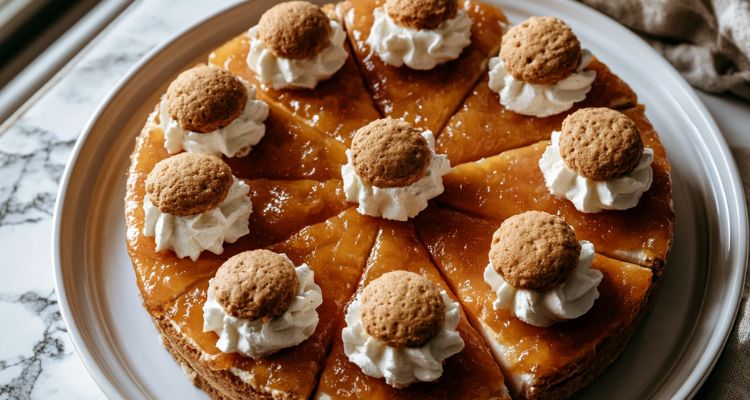
- Decorate: Loosen the edges with a small palette knife, push up the base, and slip onto a serving plate. Heat the apricot jam then push through a sieve. Spread over the cheesecake, mark into 10 wedges, spoon a dollop of whipped cream onto each wedge, and place a ratafia biscuit on each section.
FAQs
Why does Berry fold the filling into the meringue rather than the other way round?
Berry’s instruction is to “turn the apricot mixture into the meringue mixture and fold well together.” This is the reverse of most recipes, which fold whites into the heavier mix. By adding the dense apricot blend to the fluffy meringue, you keep more air trapped in the final mixture, giving a lighter set.
The stiff meringue has enough structure to hold the weight of the apricot mixture as you fold. If you did it the other way round, you’d need to scoop the stiff meringue onto a heavy base and it would be harder to fold evenly without knocking out air.
What does “ready-to-eat” dried apricots mean?
Ready-to-eat dried apricots are soft enough to eat without soaking first. They’re darker orange and plumper than traditional dried apricots, which are pale and hard. Berry simmers them in orange juice for 5 minutes, which softens them further and infuses them with citrus flavour before blending.
Using traditional hard dried apricots would require soaking overnight before cooking. If that’s all you have, soak them in the orange juice overnight, then simmer as Berry directs. The end result is the same, but ready-to-eat apricots save you a step.
What are ratafia biscuits and can I substitute them?
Ratafias are tiny, round almond-flavoured biscuits about the size of a 10p coin. Berry places one on each wedge of cheesecake as decoration. They’re available in most UK supermarkets in the baking aisle, often near the amaretti biscuits. Their almond flavour pairs naturally with the apricot in the filling.
If you can’t find ratafias, use small amaretti biscuits instead. They’re the closest substitute in both size and flavour. A single blanched almond on each wedge also works if you want a simpler look.
Why does Berry use honey in the filling instead of more sugar?
The 3 tablespoons of honey add sweetness with a floral note that complements the apricots. Granulated sugar would sweeten the filling but wouldn’t add any flavour. The honey also helps the food processor blend the apricots more smoothly because it’s liquid at room temperature.
Berry already uses 100g of caster sugar in the meringue, so the filling doesn’t need much extra sweetness. The honey rounds out the tartness of the soured cream and balances the sharp orange juice. Clear honey works best because it has a milder flavour than set honey.
How is this different from Berry’s other no-bake cheesecakes?
Berry’s no-bake cheesecakes split into two styles. Her chocolate brandy and ginger version folds frothy (not stiff) egg whites into the mix for a smooth set. This apricot recipe whisks whites to stiff peaks with sugar, creating a meringue that makes the filling noticeably lighter and almost mousse-like.
The fruit element also sets this apart. Most of Berry’s cheesecakes are flavoured with chocolate or citrus. This is her only one built around dried fruit cooked in juice, then blended. The result tastes like a sophisticated apricot fool set on a biscuit base.
Can I make this without a food processor?
Berry offers an alternative: “you can push the apricots through a nylon sieve, then mix with the honey, cream cheese, soured cream and egg yolks with a wooden spoon.” The sieve method takes longer but gives an equally smooth result. Use a nylon sieve rather than metal, as Berry specifies, because metal can react with the acid in the orange juice.
The key is getting the apricots completely smooth before adding the gelatine. Any lumps in the fruit mixture will stay lumpy once the gelatine sets. If sieving, push hard with the back of a spoon and scrape the underside of the sieve regularly to collect the puree.