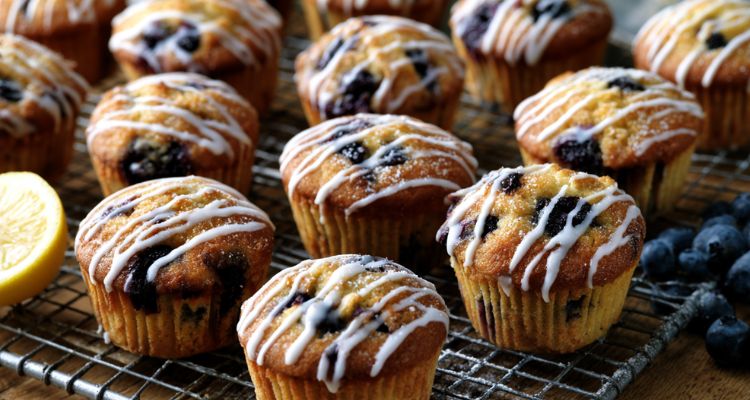
Hairy Bikers lemon cupcakes are light, yoghurt-based sponges with blueberries and lemon zest, finished with a thin lemon drizzle icing. The recipe makes 12 at just 167 calories each, with 20 minutes of prep and 18 minutes in the oven.
This comes from The Hairy Dieters (2012), and the full recipe name is “Skinny Lemon Cupcakes with Drizzly Icing.” Si and Dave warn “just eat one mind, not the whole batch.” There’s no butter anywhere in the recipe. Sunflower oil and low-fat yoghurt do the work instead.
The technique that keeps these light is minimal mixing. Si and Dave say to stir the wet ingredients into the dry with a large metal spoon “until very lightly mixed.” Overmixing develops gluten and turns the sponge tough, so a few quick folds and some visible streaks of flour are fine.
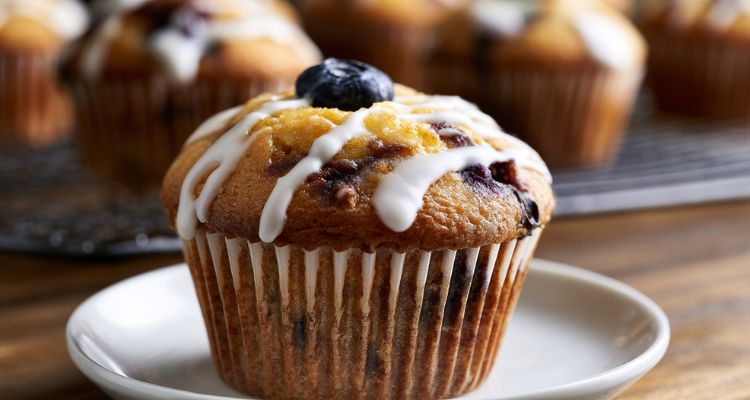
Hairy Bikers Lemon Cupcakes
Course: DessertCuisine: BritishDifficulty: Easy12
servings20
minutes18
minutes167
kcal40
minutesA low-calorie cupcake from the first Hairy Dieters cookbook (2012), using sunflower oil and yoghurt instead of butter. Blueberries are folded into the batter with lemon zest, and the icing is a thin drizzle rather than thick buttercream. Baked in a deep muffin tin at 200°C.
Ingredients
- For the cupcakes:
200g self-raising flour
1 tsp bicarbonate of soda
75g golden caster sugar
100g blueberries
finely grated zest of 1 unwaxed lemon
2 large eggs
150ml low-fat natural yoghurt
2 tbsp semi-skimmed milk
50ml sunflower oil
- For the lemon icing:
100g icing sugar
4–4½ tsp fresh lemon juice
Directions
- Prepare the tin: Preheat the oven to 200°C/Fan 180°C/Gas 6. Line a 12-hole deep muffin tin with non-stick paper cases or folded squares of baking parchment.
- Make the dry mix: Sift the flour and bicarbonate of soda into a large bowl and stir in the sugar, blueberries and lemon zest. Make a well in the centre.
- Make the wet mix: Beat the eggs with a large whisk until smooth, then beat in the yoghurt, milk and oil until well combined. Stir into the flour mixture with a large metal spoon until very lightly mixed.
- Bake: Working quickly, divide the batter between the paper cases. Bake in the centre of the oven for 16–18 minutes or until well risen and golden brown. Transfer to a wire rack and leave to cool.
- Ice: Mix the icing sugar and lemon juice in a small bowl until smooth and runny. Drizzle the icing over the cooled cupcakes with a spoon and leave to set for at least 30 minutes before serving.
Notes
- Calories: Self-raising flour 200g (~690) + sugar 75g (~290) + blueberries 100g (~57) + lemon zest (~5) + eggs ×2 (~156) + yoghurt 150ml (~86) + milk 30ml (~14) + sunflower oil 50ml (~442) = ~1,740 batter. Icing: icing sugar 100g (~400) + lemon juice (~5) = ~405. Total: ~2,145 kcal ÷ 12 = ~179 kcal. Official site states 167 kcal. Used 167.
FAQs
Why use sunflower oil instead of butter?
Butter makes rich, dense sponges that taste great but pack in the calories. Sunflower oil gives a lighter, more open crumb and uses less fat overall. Si and Dave use just 50ml for 12 cupcakes, which works out at barely a teaspoon per cake.
A standard cupcake recipe uses 100–150g of butter, which would add roughly 100 calories per cake. The oil and yoghurt together give enough moisture and tenderness without that extra weight. The lemon icing adds sweetness on top so you don’t miss the buttery richness.
Why is there bicarbonate of soda as well as self-raising flour?
The yoghurt in the batter is acidic, and bicarbonate of soda reacts with acid to create carbon dioxide bubbles. Those bubbles lift the sponge and give it a lighter texture than self-raising flour could manage on its own.
Without the bicarb, these cupcakes would be flatter and denser. The double leavening is what lets Si and Dave use oil and yoghurt instead of creamed butter and still get a proper rise. It’s the same chemistry as adding bicarb to a buttermilk scone.
Why mix with a metal spoon and work quickly?
A metal spoon cuts through batter cleanly without knocking out the air. Wooden spoons and silicone spatulas drag through the mixture, which develops gluten and makes the sponge chewy rather than tender.
Si and Dave say “very lightly mixed,” and they mean it. You should see a few streaks of flour in the batter when you stop stirring. The blueberries will distribute themselves as you spoon the mixture into the cases. If you’ve tried the Hairy Bikers blueberry mini loaf cakes, those use a similar light-touch mixing approach.
Can I leave out the blueberries?
You can, but they add moisture, colour and a burst of fruit that balances the lemon. Without them the cupcakes will be slightly drier and more one-note in flavour.
If you don’t have blueberries, raspberries or small blackberries work as swaps. Frozen fruit is fine straight from the freezer, though pat it dry so it doesn’t make the batter too wet. The berries also help justify calling these a lighter option, since fruit in the batter means less sugar is needed to carry the flavour.
What makes the icing “drizzly” instead of thick?
The ratio is the key: 100g of icing sugar to 4–4½ teaspoons of lemon juice gives a thin, pourable consistency. A standard buttercream uses icing sugar mixed with butter, which gives a thick, spreadable frosting that adds 80–100 calories per cupcake.
Si and Dave’s drizzle adds far fewer calories and looks more elegant. Spoon it in thin lines across each cupcake rather than trying to cover the whole surface. The icing sets to a slight crackle after 30 minutes, which gives a contrast against the soft sponge.
How do I store these cupcakes?
Keep them in an airtight container at room temperature for up to 3 days. The yoghurt and oil in the batter help them stay moist longer than a butter-based cupcake, which tends to go stale by day two. I find they’re at their best on the second day, once the lemon icing has fully set.
The icing stays set as long as the container is sealed. Don’t refrigerate them or the sponge goes rubbery. They freeze well without the icing if you want to batch-bake: defrost, then drizzle fresh icing on the day you serve them.