
Jamie Oliver’s Sichuan pepper beef brisket rubs a kilo of unrolled brisket with ground Sichuan peppercorns and Chinese five-spice, sits it on a bed of onions, orange juice, garlic, ginger, soy, balsamic and honey, covers it tightly and slow-roasts at 140°C for 3 hours until it falls apart. You pull the meat in the tray, toss it through the juices, and serve it with vermicelli noodles, a quick cucumber pickle and toasted sesame seeds. It serves six at 704 kcal.
The recipe is from Simply Jamie (2024). Oliver calls it “full of punchy flavours” with an “easy hands-off method,” and the hands-off part is the real selling point: 18 minutes of prep, then the oven does everything. The low, slow cook breaks down the brisket’s connective tissue into gelatine, turning a tough, cheap cut into something meltingly tender.
The braising liquid is where the East-meets-West flavour lives. Orange juice, soy sauce, balsamic vinegar and honey simmer together under the foil for 3 hours, reducing into a sticky, savoury-sweet glaze that coats the pulled meat. The balsamic is the unexpected ingredient: its aged, tangy sweetness deepens the soy and honey without tasting Italian, and it works in the same register as a Chinese black vinegar.
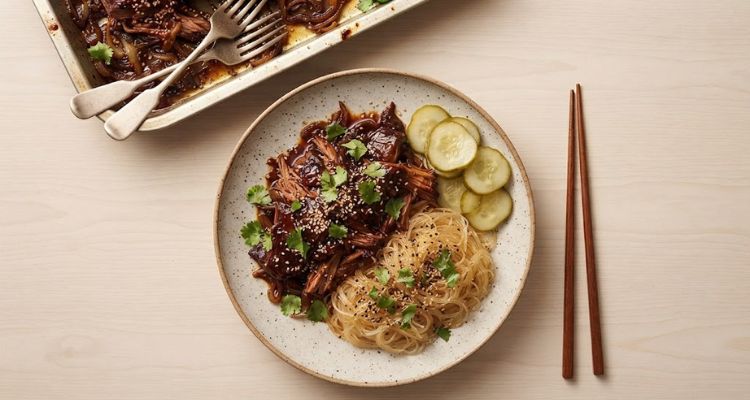
Jamie Oliver Sichuan Pepper Beef Brisket
Course: Dinner, LunchCuisine: BritishDifficulty: Easy6
servings18
minutes3
hours704
kcal3
hours18
minutesJamie Oliver’s slow-roast brisket from Simply Jamie: Sichuan peppercorn and five-spice rubbed beef on an orange-soy-balsamic base, pulled apart and served with vermicelli noodles, cucumber pickle and sesame seeds. Eighteen minutes of prep, three hours hands-off. Serves six.
Ingredients
2 large red onions
2 oranges
4 cloves of garlic
4cm piece of ginger
2 tablespoons low-salt soy sauce
2 tablespoons balsamic vinegar
2 tablespoons runny honey
4 teaspoons Sichuan peppercorns
1kg higher-welfare brisket, unrolled
4 teaspoons Chinese five-spice
1 cucumber
6 nests of vermicelli rice noodles (300g total)
½ a bunch of coriander (15g)
2 tablespoons toasted sesame seeds
Directions
- Build the base:Preheat the oven to 140°C/275°F/gas 1. Peel and roughly chop the onions and place in a small high-sided roasting tray. Halve the oranges and squeeze in the juice. Peel, finely chop and scatter in the garlic and ginger, drizzle in the soy, balsamic and honey and mix together.
- Rub and roast:Grind the Sichuan peppercorns fine in a pestle and mortar and rub all over the brisket with the five-spice, a pinch of salt and pepper and a little olive oil. Sit the meat on top of the onions, cover tightly with foil and roast for 3 hours, until tender and pullable. Add splashes of water if it looks dry.
- Make the sides:Finely slice the cucumber into rounds, toss with a pinch of salt and 2 tablespoons of red wine vinegar. Rehydrate the noodles to packet instructions and drain.
- Pull and serve:Remove the foil and use forks to pull the meat apart, tossing it through the onions and tray juices. Serve with the noodles, cucumber, coriander leaves and toasted sesame seeds. Let everyone help themselves.
Notes
- Note: Simply double the recipe to serve a crowd.
FAQs
What are Sichuan peppercorns?
They’re not true peppercorns but the dried husks of the prickly ash berry, used across Chinese cooking. They have a unique numbing, tingling quality (called “má”) alongside a citrusy, floral aroma that’s completely different from black pepper’s heat. Ground fine and rubbed onto the brisket, they give the crust a warm, buzzy tingle.
You’ll find them in the spice aisle or in Chinese supermarkets. Toast them briefly in a dry pan before grinding for a more intense flavour. Combined with the Chinese five-spice (which typically contains star anise, cloves, cinnamon, Sichuan pepper and fennel), they give the brisket a genuinely Chinese flavour profile.
Why balsamic vinegar in a Chinese-spiced dish?
It works because aged balsamic has a similar sweet-sour-dark profile to Chinese black vinegar (Chinkiang vinegar), which is the traditional Chinese braising acid. Oliver uses it as a storecupboard swap that most British kitchens already have, and its tangy, grape-concentrated sweetness deepens the soy and honey into something richer than either alone.
If you have Chinkiang vinegar, use that instead for a more authentically Chinese flavour. But the balsamic isn’t wrong: the 3-hour cook mellows and integrates everything, and the finished dish doesn’t taste Italian. It tastes like Oliver’s own East-West hybrid.
How do I know when the brisket is done?
It should be “tender and pullable,” which means two forks should slide into the meat and shred it apart with no resistance. If the fibres still hold together when you try to pull, give it another 30 minutes and check again. Brisket is forgiving at 140°C: an extra half-hour won’t hurt it, but an hour less will leave it tough.
The low temperature (140°C/275°F/gas 1) is essential. Higher heat would dry the outside before the collagen in the centre breaks down. The tight foil cover traps steam and keeps the meat moist. If the tray looks dry when you check halfway, add a splash of water.
Can I use a different cut?
Beef cheeks, short ribs or chuck would all work with the same method and timing, since they’re all collagen-rich cuts that need long, slow cooking to become tender. Lean cuts like topside or silverside would dry out over 3 hours at any temperature, so avoid those.
The recipe specifies brisket “unrolled,” meaning a flat piece rather than a tied roll, which gives more surface area for the spice rub and more contact with the braising liquid. Ask your butcher for a flat-cut brisket, roughly 1kg.
Can I make it ahead?
Yes, and it’s better for it. The pulled brisket in its juices keeps in the fridge for 3 days and freezes for 3 months. The flavours deepen overnight as the meat sits in the soy-orange-balsamic juices, so it genuinely tastes better reheated than fresh.
Reheat gently in the tray, covered, in a low oven (150°C for 20-30 minutes), adding a splash of water if the juices have thickened. Make the noodles and cucumber fresh when you serve. This make-ahead quality makes it an ideal dinner-party main: all the work is done the day before, and you just reheat and assemble.
What should I serve alongside?
Oliver keeps it simple: vermicelli noodles, quick-pickled cucumber, coriander and sesame seeds. The noodles soak up the sticky juices, the cucumber cuts through the richness, and the coriander and sesame add freshness and crunch. He also suggests interesting cress or delicate seasonal leaves.
For a fuller spread from the same book, start with the fragrant spicy fish soup as a lighter first course, or serve the jarred pepper pasta as a starter for a different crowd. Among the other Oliver slow-cooks, his roast venison from the Christmas Cookbook takes a similarly long approach but with Italian-European flavours rather than Chinese.


