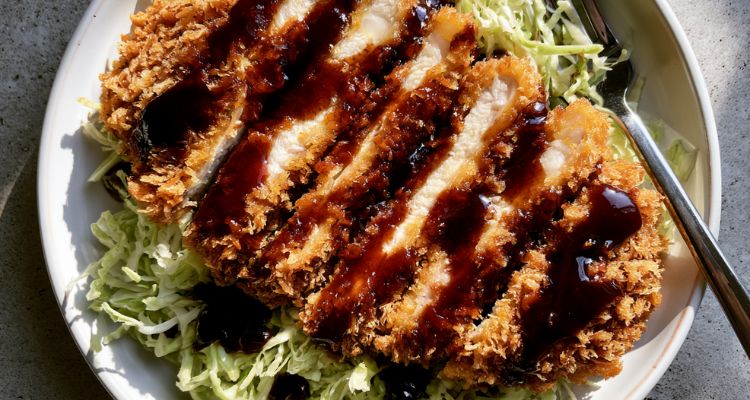
This Hairy Bikers tonkatsu pork coats thick loin steaks in seasoned flour, egg, and panko breadcrumbs, then fries them golden and serves them with a homemade sauce for around 560 kcal. The whole dish takes about 30 minutes, and most of that time is spent at the hob rather than prepping.
Si and Dave cooked this on a riverbank in Tokyo for their Asian Adventure cookbook and describe the sauce as “like a sort of brown barbecue sauce.” Their homemade version uses nine ingredients including sake, mirin, and Worcestershire sauce, which lifts it well above any bottled alternative.
The frying temperature is what separates crispy tonkatsu from burnt breadcrumbs over raw pork, so keep the heat at medium and resist turning it up. Four minutes on each side at that steady temperature gives you golden panko outside and pork cooked right through to the centre.
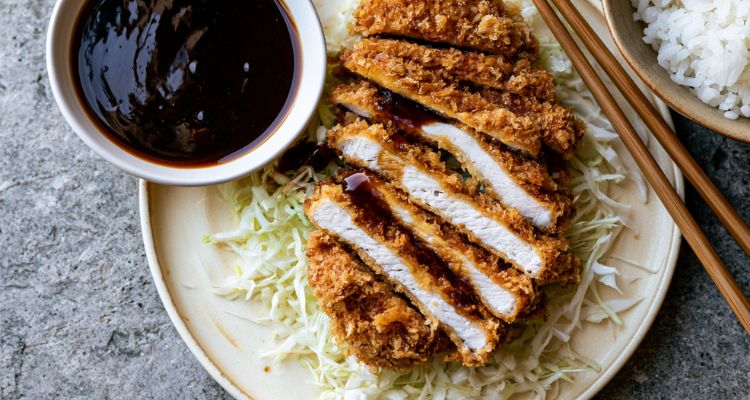
Hairy Bikers Tonkatsu Pork
Course: DinnerCuisine: BritishDifficulty: Easy4
servings15
minutes15
minutes560
kcal30
minutesThick pork loin steaks triple-coated in flour, egg, and panko then shallow-fried until shattering-crisp, served on a bed of shredded Chinese cabbage with a warm tonkatsu sauce made from scratch. Si and Dave say you can bread the steaks in advance and keep them in the fridge until you are ready to fry.
Ingredients
125g ketchup (Japanese or any kind)
75ml sake
2 tbsp Japanese or English Worcestershire sauce
2 tbsp dark soy sauce
1 garlic clove, finely grated
1 tsp finely grated fresh root ginger
1 tsp Japanese or Dijon mustard
1 tbsp mirin
1 tbsp sugar
- For the pork:
4 thick pork loin steaks
4 tbsp flour
2 eggs, beaten
75g panko breadcrumbs
Vegetable oil or groundnut oil, for frying
Flaked sea salt
Freshly ground black pepper
- To serve:
½ Chinese cabbage, finely shredded
Directions
- Make the sauce: Add all the sauce ingredients to a small saucepan and stir well, then bring to a gentle simmer and cook for 5 minutes until the garlic and ginger are soft and the sauce has thickened slightly. Strain through a fine sieve into a bowl, cover with cling film, and set aside at room temperature, since the sauce is not served hot.
- Set up the breading station: Beat the eggs and pour them into a shallow dish. Spread the flour in a separate dish and season well with salt and black pepper, then put the panko breadcrumbs in a third dish.
- Bread the steaks: Take one pork steak, dredge it in the seasoned flour, then dip it into the egg and lastly press it into the panko breadcrumbs until well coated. Repeat with the remaining steaks and place them on a plate, ready to cook.
- Fry the pork: Pour enough oil into a large non-stick frying pan to shallow-fry the steaks, then place the pan over a medium heat. Add the steaks and fry for about 4 minutes on each side until golden brown, checking they are cooked through before removing. Cook in two batches if needed, since overcrowding the pan drops the temperature and makes the panko soggy.
- Serve: Place the cooked steaks on a serving dish with the shredded Chinese cabbage, then drizzle over some sauce. Serve with more sauce on the side.
FAQs
Why does the cookbook version include sake in the sauce?
The official Hairy Bikers website lists only eight sauce ingredients, but the Asian Adventure cookbook adds 75ml of sake that the website leaves out entirely. Sake thins the sauce to the right pouring consistency and adds a subtle fermented sweetness you cannot get from ketchup and soy alone. Without it the sauce ends up too thick and one-dimensional, so this is one ingredient worth tracking down from an Asian supermarket or the world food aisle.
What are panko breadcrumbs and why do they matter?
Panko are Japanese-style breadcrumbs made from crustless white bread, and they are coarser and flakier than standard dried breadcrumbs. That rough texture creates air pockets when fried, which is why tonkatsu has a shattering crunch that regular breadcrumbs cannot match. Most supermarkets stock panko in the world food section, and they keep for months in a sealed bag.
Can I use chicken instead of pork for katsu?
Si and Dave have several katsu recipes across their cookbooks, including a chicken shichimi katsu curry and a prawn katsu burger in the same Asian Adventure book. For a chicken version, use boneless thighs or butterflied breast and follow the same flour, egg, and panko method, though thighs need about 5 minutes per side since they are thicker. Their sweet and sour chicken from the same cookbook family uses a completely different coating if you want to compare styles.
Can I make the sauce in advance?
The sauce keeps well in an airtight jar in the fridge for up to two weeks, which makes it worth doubling the recipe. Si and Dave say to serve it at room temperature, so take it out of the fridge about 30 minutes before you need it and give it a good stir. You can also use the sauce with chicken katsu, prawn katsu, or even as a dipping sauce for their sweet and sour pork if you want a Japanese twist on a Chinese classic.
What should I serve with tonkatsu pork for a full Japanese meal?
Si and Dave suggest miso soup, rice, and Japanese pickles in the method to build a proper Japanese spread. The shredded Chinese cabbage is not optional either, because the raw, crunchy leaves cut through the richness of the fried pork and heavy sauce. If you want to add a side that bridges Japanese and British cooking, a simple caesar salad works surprisingly well alongside the crispy cutlets.